Get ready, because the biggest story in tech is about to become the biggest story on Wall Street. OpenAI, the trailblazing lab behind ChatGPT, is reportedly making serious moves to go public. And the numbers being whispered are nothing short of historic.
We’re not just talking about an IPO. We’re talking about a potential $1 trillion valuation.
If this happens, it would be one of the largest public offerings ever, instantly catapulting the AI giant into the same league as today’s tech titans. But is this real? When could it happen? And what does it mean for the future of AI?
Let’s break down everything you need to know about the upcoming OpenAI IPO.
When Could the OpenAI IPO Release Date Be?
Right now, all eyes are on the calendar. According to sources familiar with the discussions, OpenAI is exploring a potential regulatory filing as early as the second half of 2026.
However, other insiders, including reports about Chief Financial Officer Sarah Friar, have pointed to 2027 as a more concrete target.
So, why the flexible timeline? These discussions are still in their early stages. The final timing and, more importantly, the valuation will depend heavily on the company’s performance and the overall market’s appetite for tech stocks.
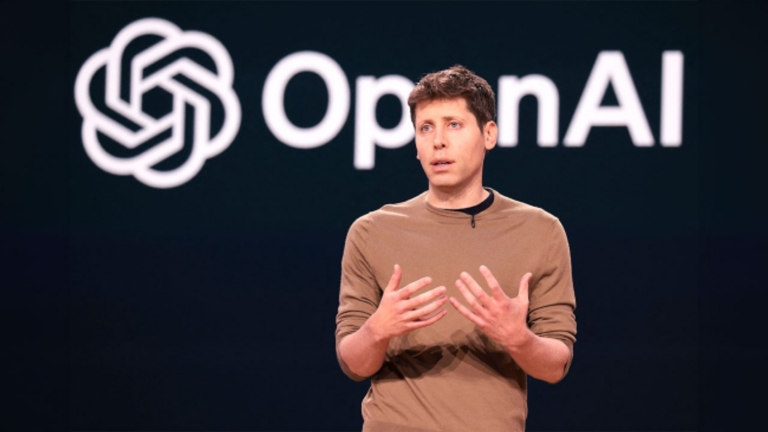
While an OpenAI spokesperson stated that an IPO “is not our focus,” CEO Sam Altman has been more direct. During a recent livestream, he admitted that going public is “the most likely path for us, given the capital needs that we’ll have.”
Why Go Public? The Massive Capital Needs for AGI
That brings us to the “why.” Why would a company already valued at $500 billion and reportedly on track for $20 billion in annual revenue need to go public?
The answer is one of Sam Altman’s core ambitions: achieving Artificial General Intelligence (AGI).
AGI isn’t just a smarter ChatGPT. It’s the theoretical point where an AI can outperform humans at most economically valuable work. Building this requires an almost unimaginable amount of resources—think data centers, custom chips, and massive energy consumption. Altman’s plan to build this AI infrastructure is expected to cost trillions of dollars.
An IPO is the most efficient way to raise that kind of capital. It also gives OpenAI a public stock it can use to acquire other companies and attract top-tier talent with lucrative stock options. Despite its booming sales, the company’s expenses are also soaring, making a massive cash infusion from the public markets a logical next step.
A New Kind of Company: Understanding OpenAI’s Restructure
To even make an IPO possible, OpenAI had to solve a unique problem: how to be a for-profit-company while staying true to its original nonprofit mission?
The answer is a brand-new corporate structure.
- The Past: OpenAI was founded in 2015 as a nonprofit organization dedicated to ensuring AGI “benefits all of humanity.”
- The Present: This week, the company completed a major overhaul. It is now a Public Benefit Corporation (PBC), or “capped-profit” entity, named OpenAI Group.
- The Control: Here’s the key—this new for-profit business is still controlled by the original nonprofit, now called the OpenAI Foundation.
The Foundation holds a 26% stake in the for-profit company and, crucially, holds the power to appoint its board. This hybrid structure is designed to do two things at once:
- Allow the company to raise capital like a normal business.
- Ensure the nonprofit mission of safety and public benefit legally overrides the goal of maximizing profits for shareholders.
What This Means for Microsoft and the AI Market
A $1 trillion public debut would send massive shockwaves through the market. Early investors like SoftBank and Thrive Capital would see astronomical returns.
But the single biggest winner? Microsoft.
After investing $13 billion into the company, Microsoft now owns a 27% stake in the for-profit OpenAI Group. A $1 trillion IPO would make that stake one of the most successful tech investments in modern history.
This news comes at a time when AI is dominating investor interest. With AI chipmaker Nvidia recently smashing a $5 trillion market cap, a $1 trillion valuation for the world’s leading AI research lab suddenly seems plausible.
The OpenAI IPO isn’t just a financial milestone. It’s the starting gun for the next phase of the AI revolution, and Wall Street is ready to place its bets.