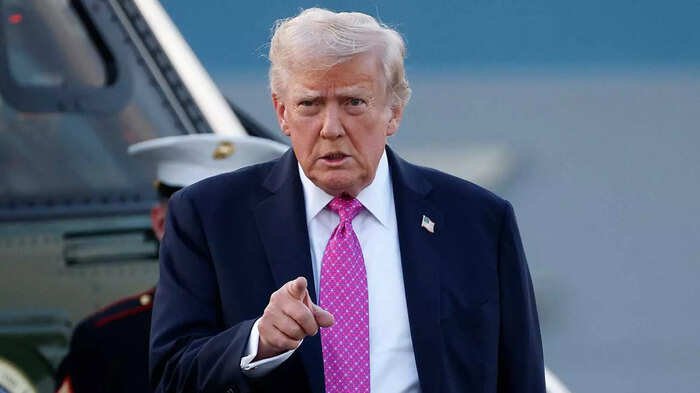
In a significant update to U.S. defense policy, President Donald Trump announced an immediate directive to ramp up the nation’s nuclear weapons program, including the resumption of testing.
This announcement, which was posted on the Truth Social platform, represents a notable departure from a U.S. policy that has been in place for over three decades. The timing of the statement has been noted by observers, as it comes just before a scheduled meeting with Chinese President Xi Jinping in South Korea.
This development has led to discussions among the international community regarding its potential impact on global security and arms control frameworks.
Details of the Announcement
In the statement, President Trump indicated he had “instructed the Department of War to start testing our Nuclear Weapons on an equal basis” with other nations.
This order signals a change from the moratorium on U.S. nuclear weapons testing, which has been in effect since 1992. Since that time, the United States has used computer simulations and other non-explosive methods to maintain its nuclear arsenal.
The specifics of what the new testing will entail—such as whether it involves full-scale tests or other forms of missile and systems verification—were not detailed in the initial announcement.
Stated Rationale for the Decision
The administration has cited the strategic landscape as the primary driver for this policy shift. The president’s statement specifically mentioned the nuclear programs of other nations.
Two main points were highlighted as justification:
- China’s Growing Arsenal: The president’s post noted, “China is a distant third, but will be even within 5 years.” This comment reflects publicly stated concerns from U.S. defense officials about the pace of China’s nuclear modernization and stockpile expansion.
- Other Nations’ Testing: The directive was also linked to recent activities by other nuclear-armed states. Russia, for example, recently announced successful tests of new strategic weapons systems. The U.S. order to test “on an equal basis” appears to be a response to these and other global developments.
Potential Implications for Global Policy
An adjustment in U.S. nuclear policy of this magnitude has broad implications, and various groups are analyzing the potential outcomes.
- Arms Control Discussions: The U.S. has been a party to various international treaties and agreements aimed at limiting the spread and testing of nuclear weapons. Arms control proponents have expressed concern that a resumption of testing could complicate future non-proliferation efforts and lead other nations to reconsider their own testing moratoriums.
- International Relations: The announcement introduces a new factor into the complex relationships between the world’s nuclear powers. The timing, just ahead of the meeting with President Xi, suggests it will be a significant topic in diplomatic and security dialogues moving forward.
- Domestic Response: The policy change is also a subject of domestic discussion. For instance, Representative Dina Titus has already stated an intention to introduce legislation in response to the order, indicating that the topic will be debated within Congress.
Developing Aspects of the Story
As this is a new and unfolding development, several key points will be monitored by observers:
- International Reactions: The official responses from other world governments, particularly China and Russia, as well as U.S. allies, will be significant.
- Implementation Details: The Pentagon and Department of Energy (which oversees the nuclear stockpile) will be expected to provide more specific information on how they plan to implement the president’s directive.
- Diplomatic Dialogue: The outcome of the upcoming meeting between President Trump and President Xi will be closely watched for any discussion on this new policy.
The announcement marks a notable shift in the ongoing international discussion regarding nuclear strategy and global security.