
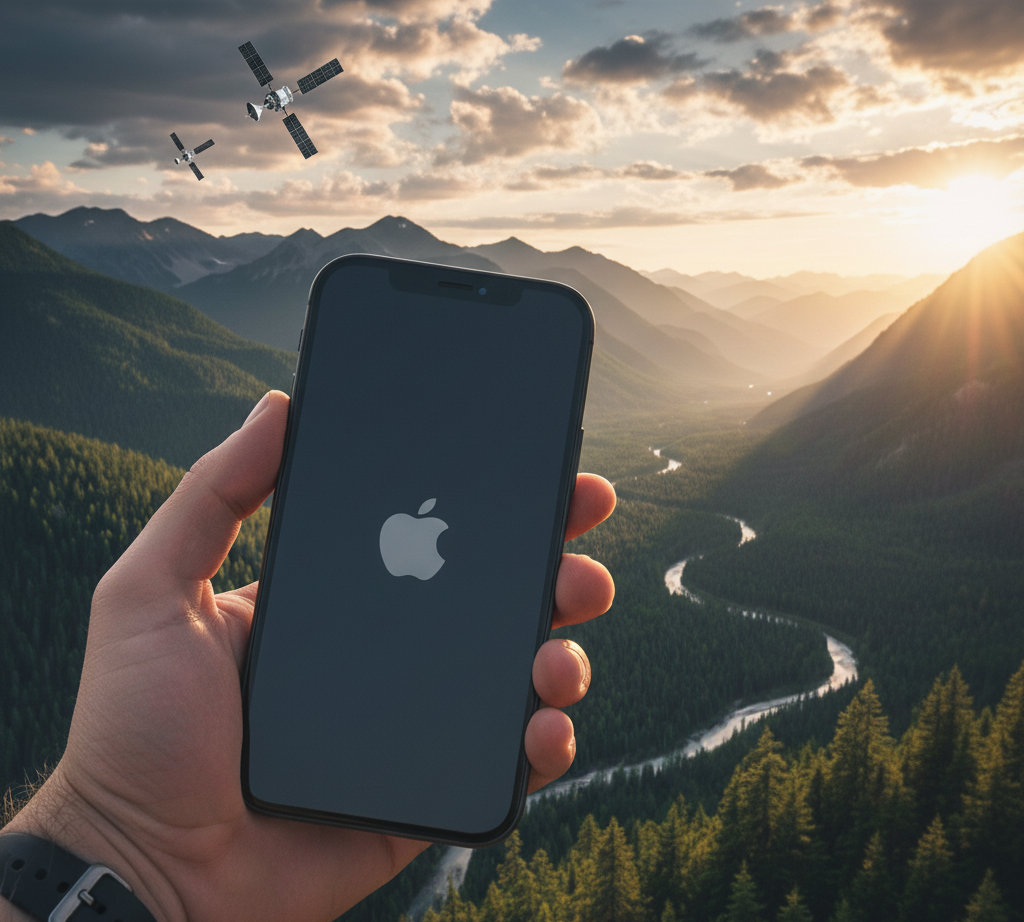
We’ve all been there: that moment the three little signal bars vanish, turning your high-tech smartphone into an expensive paperweight. Whether you’re deep in the wilderness, stuck in a rural dead zone, or caught in an emergency, losing connectivity is frustrating—and potentially dangerous.
But what if your iPhone simply refused to go offline?
That’s the exact future Apple is engineering. Building on its groundbreaking Emergency SOS via Satellite, the tech giant is ready to transform how we think about “no signal.” Soon, your iPhone will use satellites for everyday tasks, making tools like Apple Maps and Messages work flawlessly, no matter where you are.
This isn’t just an incremental update; it’s a monumental shift toward a truly connected world.
From Emergency Lifeline to Daily Necessity
Apple first introduced iPhone Satellite Features with the iPhone 14 in 2022, primarily for emergency situations. This allowed users to text rescue teams when traditional cellular service was unavailable. The service later expanded to include roadside assistance.
Now, Apple’s internal Satellite Connectivity Group is scaling this technology to make our most-used apps—Maps and Messages—functional completely off-grid. The goal is simple: to make your iPhone useful in every situation, not just an emergency.
Here’s a breakdown of the game-changing new capabilities reportedly in development:
- Apple Maps Via Satellite: Imagine having turn-by-turn navigation or finding your current location deep in a canyon, a forest, or a vast ocean—with zero cell service. This is one of the most exciting new features, ensuring you can always find your way.
- Off-Grid Messaging: Moving beyond text-only, the plan includes enabling the sharing of photos and other rich media via satellite connections. Stay in touch with family and friends even when hiking, camping, or traveling through remote regions.
The “Natural Usage” Breakthrough
One of the biggest hurdles with current satellite connectivity is the requirement to point your device toward the sky to establish a connection. It’s effective, but awkward.
Apple engineers are reportedly tackling this challenge with what they call “Natural Usage Satellite” improvements.
The next-generation system aims to eliminate the need for you to physically angle your phone. Instead, your iPhone should be able to maintain a satellite link even while kept in your pocket, inside a car, or tucked into a bag.
This makes the technology truly seamless and practical for daily life. It transitions satellite connectivity from a complex maneuver to a reliable, always-on utility.
The Tech Driving the Future: 5G NTN
Underpinning these expanded iPhone Satellite Features is a major hardware and software push. Future iPhones are expected to include support for 5G NTN (Non-Terrestrial Networks).
What is 5G NTN?
This emerging technology creates a hybrid network that combines traditional mobile towers with satellite systems. The result? Stronger, wider, and more consistent coverage.
- Massive Coverage Boost: In areas where network connectivity is often patchy—like rural parts of India or remote stretches of the US—5G NTN allows your phone to automatically tap into a satellite signal, preventing those frustrating drops in service.
- Enhanced Reliability: This isn’t just about emergency communication; it’s about providing stable connectivity in regions where mobile carriers struggle to deliver.
Opening the Off-Grid Ecosystem to Developers
Apple’s ambitious plan isn’t restricted to its own apps. The company is reportedly building a new developer framework (API) that will allow third-party app makers to integrate satellite connectivity.
This opens the floodgates for innovation! Imagine what this means for apps focused on:
| App Category | Satellite Feature Potential |
| Travel & Adventure | Real-time, off-grid location sharing and tracking. |
| Health & Safety | Remote health monitoring, medical alerts, and drone integration in no-signal areas. |
| Logistics & Enterprise | Asset tracking and communication for remote field workers. |
This move is a strong indicator that Apple sees satellite communication as a long-term, foundational component of the iOS ecosystem.
The Race for Global Connectivity
Apple’s accelerated timeline is also a response to the rapidly growing competitive landscape.
- SpaceX’s Starlink, owned by Elon Musk, has already partnered with T-Mobile to bring satellite messaging to Android devices.
- Verizon and AT&T are actively developing similar off-grid technologies.
By controlling both the hardware (the iPhone) and the software (iOS, Maps, Messages), Apple aims to maintain its competitive edge and ensure a premium, secure, and private user experience that lives up to its brand standard. The long-term goal is clear: to keep users connected, no matter where in the world they are.
The Path Ahead
While the ultimate goal of satellite-based phone calls and full web browsing is not currently on the immediate roadmap, the rapid pace of development suggests those capabilities are not far off.
For now, the focus is on practical, everyday utility—enabling users to navigate and communicate reliably. These new iPhone Satellite Features will be particularly impactful in countries like India, where network stability in rural areas remains a significant challenge.
The bottom line? That moment of panic when you see “No Service” could soon become a relic of the past. Your iPhone is about to become more reliable and capable than ever before.