
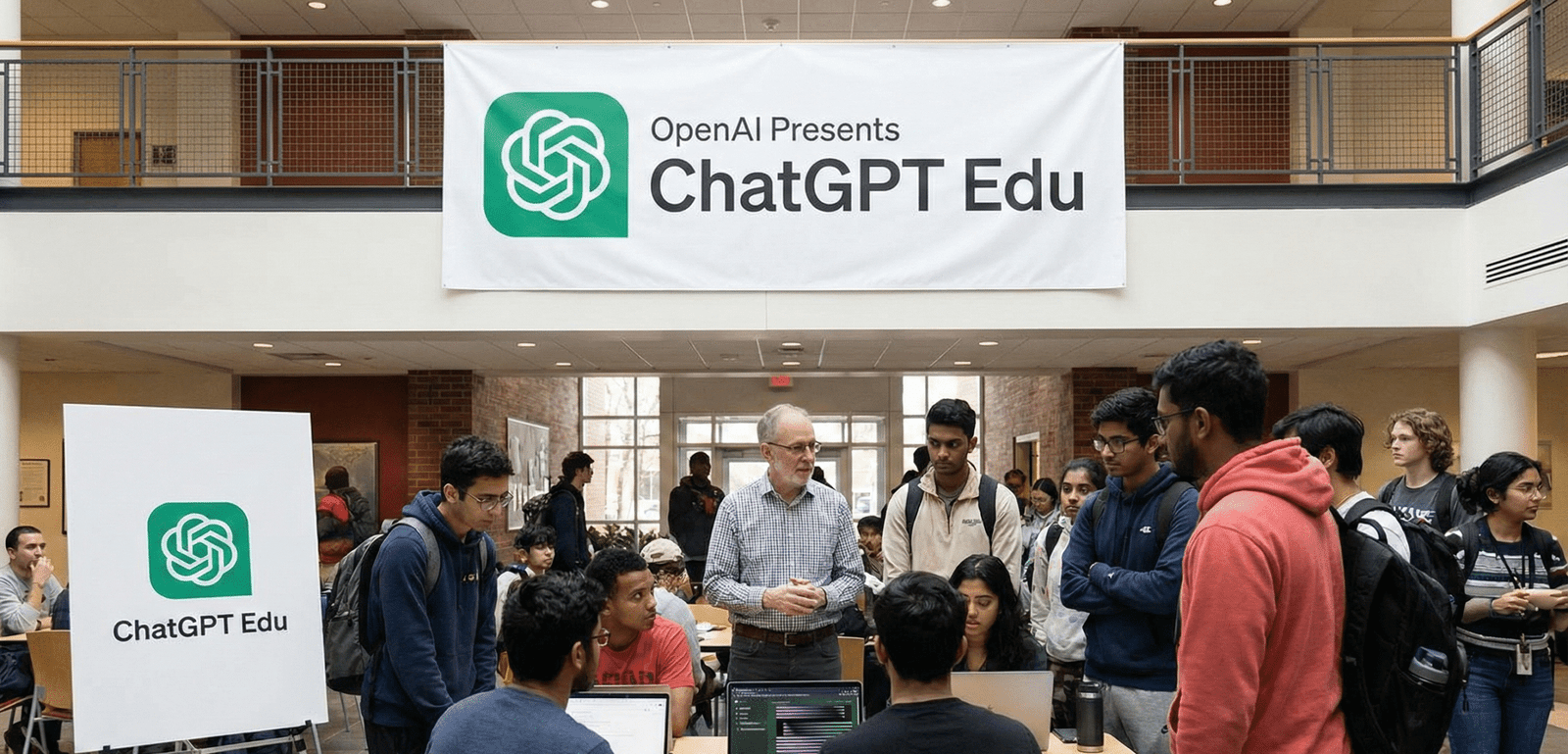
Let’s be honest for a second—Artificial Intelligence in the classroom has been the “elephant in the room” for the last year. Students are using it, professors are debating it, and university administrators have been losing sleep over data privacy.
Well, OpenAI just made a massive move to bridge that gap.
They have officially launched ChatGPT Edu, a version of their powerhouse AI built specifically for universities. It’s designed to be deployed across campuses for students, faculty, researchers, and campus operations.
If you’ve been waiting for a safe, powerful, and integrated way to bring AI into the lecture hall, this is the update you need to read. Let’s break down exactly what this offers and why it’s a total game-changer for higher education.
What Exactly is ChatGPT Edu?
Think of ChatGPT Edu as the “pro” version of ChatGPT, but tailored to the unique needs of a university ecosystem. It isn’t just a chatbot; it’s an infrastructure.
Powered by OpenAI’s flagship model, GPT-4o, this platform allows universities to give high-level AI access to their entire community. It sits somewhere between the personal “Plus” subscription and the massive “Enterprise” tier. It’s affordable enough for broad deployment but powerful enough to handle complex research data.
But the biggest selling point? Security.
The Features That Matter (For Teachers & Admins)
OpenAI clearly listened to the feedback from the education sector. Here are the standout features that make ChatGPT Edu worth the hype:
1. Enterprise-Level Security & Privacy
This is the big one. In the standard free version of ChatGPT, your conversations can be used to train OpenAI’s models. For a university dealing with proprietary research or student data, that’s a nightmare.
With ChatGPT Edu, OpenAI does not use your data or conversations for training. This means researchers can upload sensitive datasets and professors can upload course materials without worrying about that information leaking into the public model.
2. Access to GPT-4o
Users aren’t getting the “lite” version. They get full access to GPT-4o, which is faster, smarter, and incredibly capable at text interpretation, coding, and mathematics. It also supports over 50 languages, making it a massive asset for international students or language departments.
3. Build Your Own “Custom GPTs”
This is where things get really cool for teachers. Faculty members can build “Custom GPTs” without needing to write a single line of code.
- Imagine this: A history professor creates a bot trained specifically on the documents of the French Revolution. Students can query that specific bot for their coursework, ensuring the answers are relevant to the syllabus.
- Or this: The IT department builds a GPT trained on the university’s administrative handbook to answer student questions about enrollment or campus housing instantly.
4. Much Higher Message Limits
We’ve all hit that annoying “You’ve reached your limit” message on the free tier. ChatGPT Edu offers significantly higher message caps, meaning students pulling all-nighters or researchers crunching data won’t get cut off in the middle of a workflow.
Real-World Examples: How Campuses Are Using It
This isn’t just theoretical. Before the official launch, OpenAI piloted this with major institutions like the Wharton School of the University of Pennsylvania and Arizona State University.
Here is what early adoption looks like:
- Personalized Tutoring: Professors are creating GPTs that act as Socratic tutors. Instead of giving students the answer, the AI is prompted to ask guiding questions, helping the student arrive at the conclusion themselves.
- Grant Writing Assistance: Researchers are using the tool to draft and refine complex grant proposals, saving weeks of administrative work.
- Coding & Engineering: Computer science departments are using the advanced coding capabilities to help students debug code in real-time, acting like a 24/7 teaching assistant.
Why This Changes the Narrative
For a long time, the narrative around AI in schools was “how do we ban this?” or “how do we catch cheaters?”
ChatGPT Edu signals a shift toward AI literacy. By providing an official, sanctioned, and secure tool, universities are acknowledging that AI is a skill students need to master for the future workforce. It moves the conversation from “prevention” to “empowerment.”
The Verdict
OpenAI’s ChatGPT Edu is the bridge universities have been waiting for. It solves the privacy headache, provides the best tech available (GPT-4o), and offers the flexibility to create custom learning tools.
If you are a university admin or a faculty member, it’s time to stop worrying about AI and start shaping how your campus uses it.
What do you think? Is your university ready to integrate AI, or is the classroom better off without it? Drop a comment below—I’d love to hear your take!




One Comment
it’s a really smart move by OpenAI. ChatGPT Edu addresses the core concerns universities have about AI, making it a practical and secure tool for education.